On November 5, 2025, the U.S. Supreme Court will hear oral arguments on the constitutionality of the President’s tariffs.
The President’s legal team does not address the constitutional authority of the executive to impose unilateral, unchecked tariffs. Instead they claim the tariffs have raised “trillions of dollars, as President Trump has leveraged the IEEPA tariffs into negotiated framework deals with major trading partners—including the European Union, the United Kingdom, Japan, South Korea, and now China—that address underlying causes of the declared emergencies.”
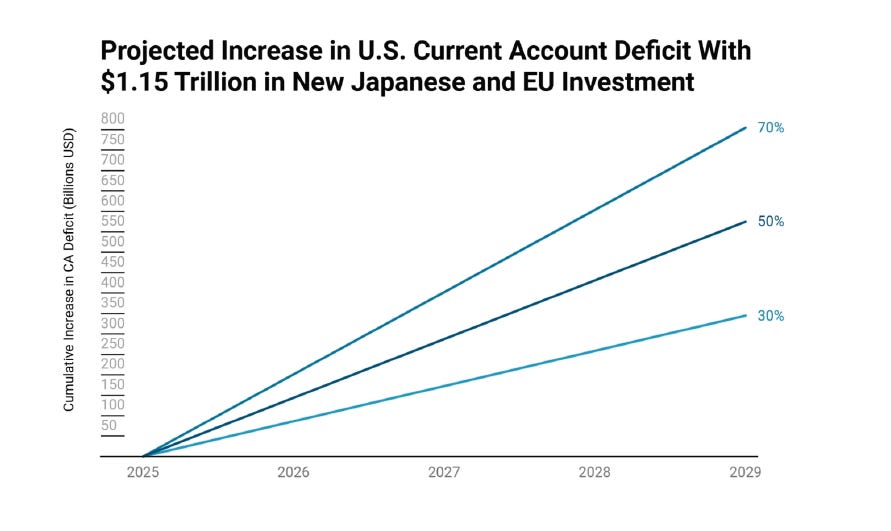
But if those claims are true, trillions of dollars in “new investment” from Japan, the EU, and other countries would increase the trade deficit. The “solution” exacerbates the “emergency” – it does not solve it.
The Supreme Court will hear arguments from small businesses opposing the tariffs: “The President has no independent constitutional authority to impose tariffs. Indeed, when the Framers enumerated Congress’s “legislative Powers,” the first was the “Power To lay and collect Taxes” and “Duties” — tariffs. U.S. Const. art. I, § 8, cl. 1.”
Learning Resources, the named plaintiff in the litigation, argues that “no President until now has ever invoked [IEEPA] — or its predecessor [statute] — to impose tariffs. Yet the current President has used IEEPA to impose sweeping tariffs that rewrite U.S. trade laws and reshape the national economy.”
The State parties argue that the “question is not whether America is a “rich nation” or “poor nation,” – rather, “the question, as in other recent cases of executive overreach, is: “Who decides?” ”
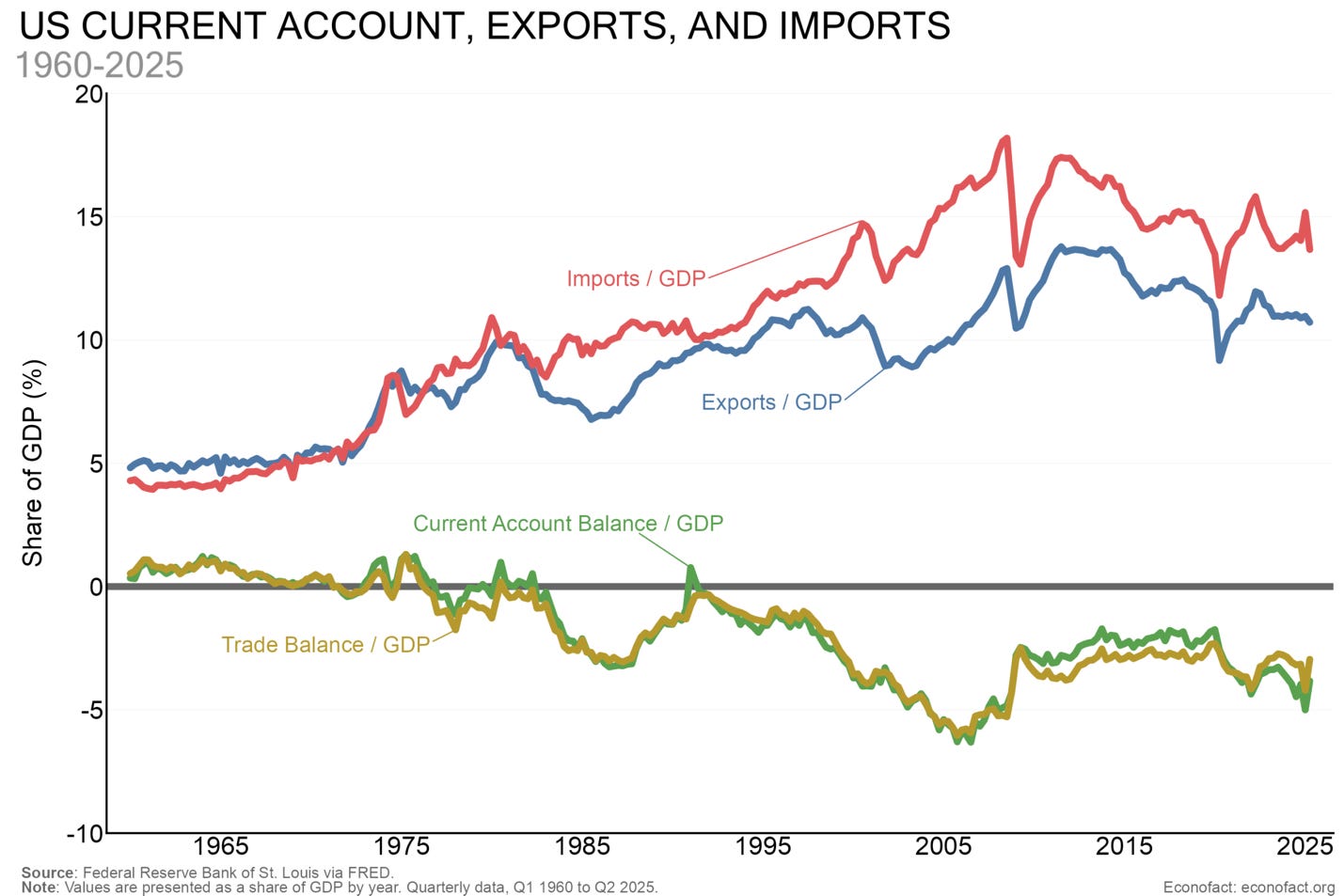
In fact, there is no basis to claim trade deficits are new, or that they are an emergency:
Montana is uniquely harmed by the President’s unconstitutional tariffs. Montana shares 14 border crossings with British Columbia, Alberta, and Saskatchewan provinces along the longest contiguous land border any state has with Canada (545 miles). Eleven of the 80 counties along the U.S. land borders are Montana counties. Canada is Montana’s number one trade partner: Montana imported $6.8 billion of goods from Canada in 2024, and sells more goods to Canada than its next 10 largest foreign markets combined.
In 2025 less than 37 pounds of fentanyl were seized at the Canada border compared to more than 5,515 pounds at the Mexican border. From 2013 to 2024, 99 per cent of pills and 97 per cent of powder-form fentanyl came from Mexico. Of the 37 pounds of fentanyl seized in 2025, less than 1.5 pounds – 0.03% – came from Montana crossings.
Despite these magnitudinous disparities, the President imposed universal tariffs in the same way on both Mexico and Canada. Then inexplicably, on July 31, 2025 the administration issued another executive order increasing Canada tariffs from 25 percent to 35 percent, while the tariffs on Mexico remained the same.
This disparity in tariffs is totally unrelated to the facts on the ground, and completely illogical. The President stopped even pretending there is a reasonable relationship between the Canada tariffs and the claimed “emergency.”
Montana does significant cross border business with Canada’s agriculture suppliers. Many farms and ranches are physically located closer to suppliers in Canada than other places in the United States, and in an emergency, it is essential for them to be able to get parts quickly. Some farmers will take their feeder calves across the border for finishing, then bring them back to the U.S. side for slaughter and sale.
Time to stop the crazy unconstitutional tariffs and get back to business.
All together.