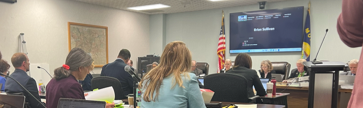
Last week, the Montana Public Service Commission held its evidentiary hearing on whether to approve Black Hills Corporation’s acquisition of NorthWestern Energy. Black Hills is building a data center empire, with a 3,200-acre campus for Meta and Microsoft at its core. It needs power. Now.
I was in that room, representing 350 Montana and the Montana Farmers Union, whose members are captive ratepayers. They are the Montanans who were not at the steak dinners where multi-million dollar golden parachutes were negotiated. What we got instead: an $18 one-time credit on our electric bill.
That $18 one-time bill credit comes from the people who testified, under oath, that “capital is not finite.”
Capital is not finite. For whom is that true?
For Meta. For Microsoft.
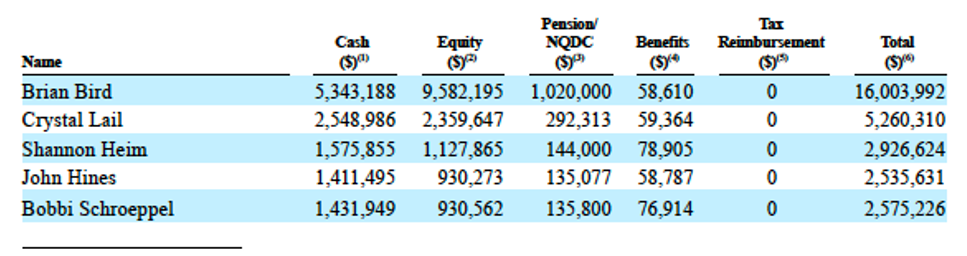
For Brian Bird, NorthWestern’s CEO, who stands to personally collect $16 million if this acquisition closes:

Capital is not finite for the institutional shareholders at Vanguard and BlackRock who are the largest owners of both Black Hills and NorthWestern. For the bankers collecting $60 million in transaction fees. For all of them, a $200 million reservation on a generation agreement is a rounding error. If the deal falls through, they write it off.
Capital is not finite when you are the masters of the universe.
For a Montana rancher or a Missoula renter, there is no portfolio of infinite capital. There is one utility. One rate. One bill. The risk is not diversifiable. The loss is not abstract. For people who make $16 an hour, who depend on the soybean crop coming in, who live on fixed retirement incomes, we are being asked to accept $18 as a fair trade for permanently losing control of our utility.
When a utility witness says “capital is not finite” under oath in a ratepayer proceeding, she is reassuring BlackRock and Vanguard. Not us. She is telling investors: Montana ratepayers will backstop your risk through the regulated rate base. You will not lose your shirts. But if things go south, Montana ratepayers will.
But the law asks a different question. The public interest demands the Commission to engage in whether this is a good deal for us, not whether it is a good deal for Meta and Blackrock.
I am running for Montana House District 92 because these questions, about the grid, data centers, and who pays for our energy future, demand transparent, honest engagement. The answers aren’t easy, but they are necessary.
Not all data centers are the same, and our policy cannot treat them as if they are. In House District 92, Krambu has proposed a 3-megawatt facility at the old Bonner mill, sourcing renewable power, employing 15 local people. There is real public opposition, and it deserves a real hearing.
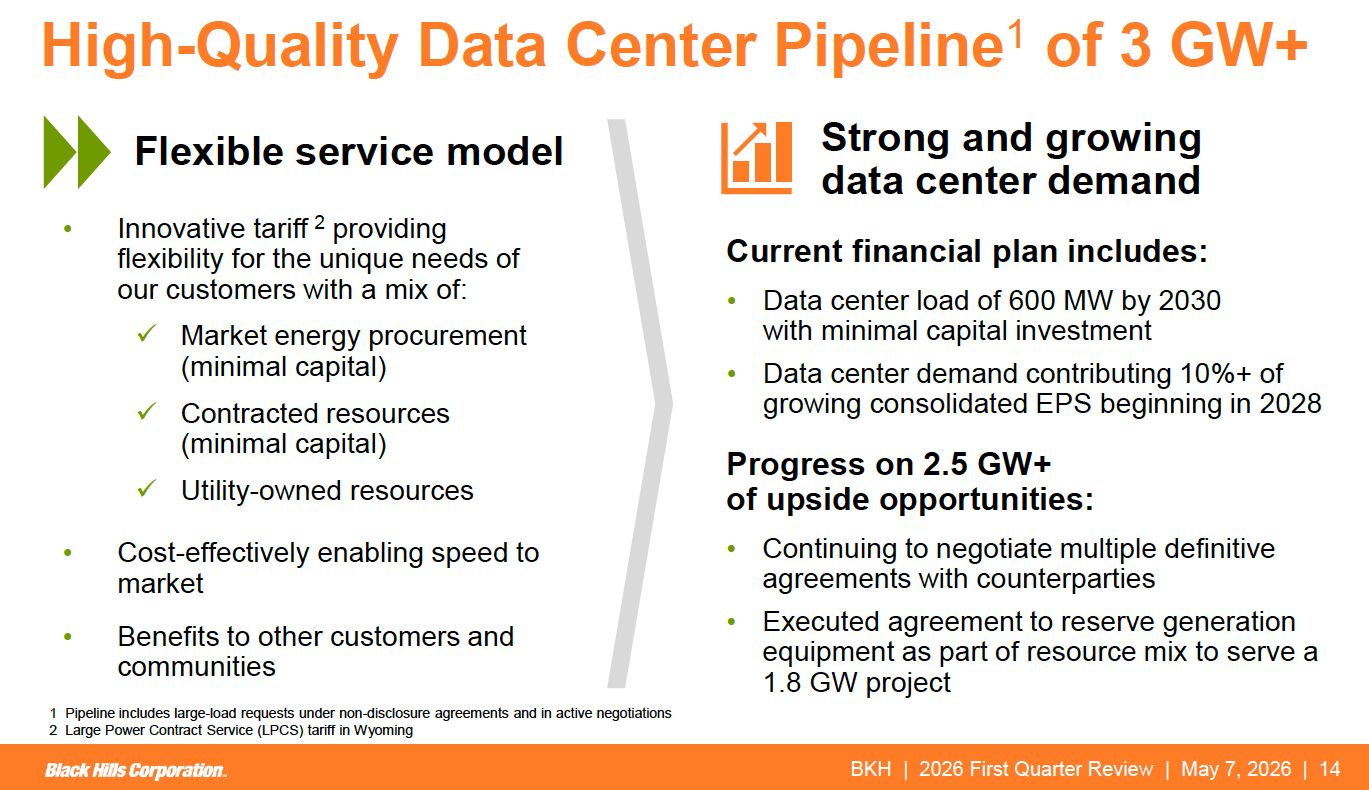
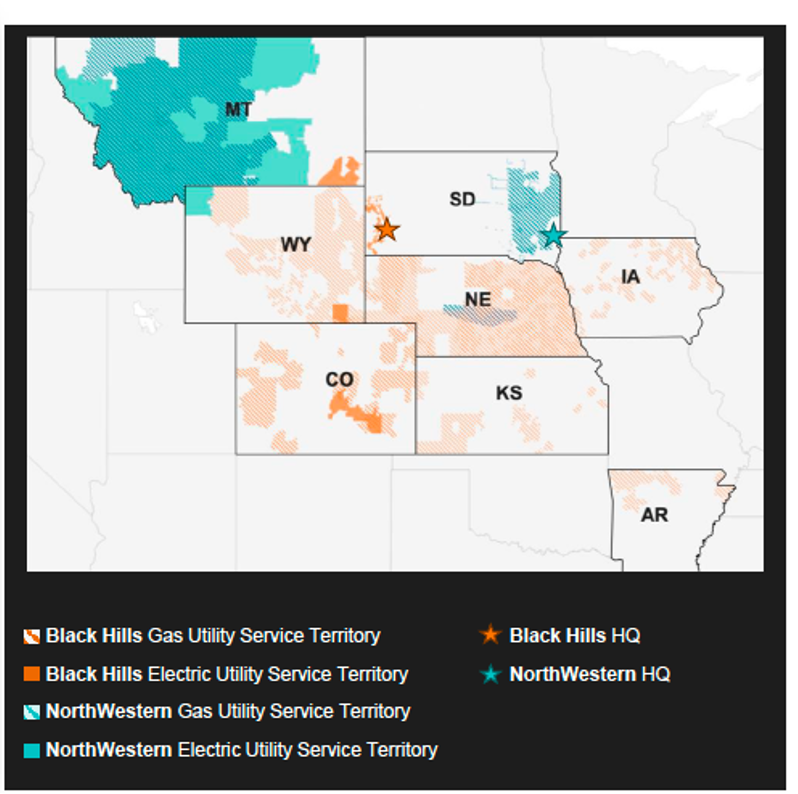
But a 3-megawatt brownfield redevelopment is categorically different from a 1-gigawatt hyperscaler campus that would consume roughly the entire average daily load of every NorthWestern customer in Montana. It is different from the 3-gigawatt data centers in Black Hills’ pipeline competing for every available megawatt across eight states:
The question that matters is the same for all of those data centers, and for us: who pays for the grid?
That question was suppressed all week in Helena. NorthWestern’s lawyers objected every time I raised it as “not relevant to this docket.” But here is what is in the docket: a Montana PBS interview that CEO Brian Bird gave to reporter Stan Parker, filed in the federal securities record. Bird told Parker that NorthWestern is currently “85 to 90 percent Montana,” and that after the acquisition, Montana drops to “just over 30 percent.” He called that a benefit. “Regulatory diversity” he said, is good for investors because a bad outcome in any single state hurts less.
Read that again. Bird is telling investors that reducing Montana’s influence over our own utility is a selling point.
For shareholders, that is true. For captive ratepayers who cannot choose another provider, it is the opposite. We will go from being the overwhelming priority of our utility to one jurisdiction among eight, to five board seats out of eleven, led by a CEO headquartered in Rapid City whose shareholders’ priority is profit.
Other states have seen this coming and acted. In February 2026, the Virginia House of Delegates passed HB 434 unanimously. HB 434 is a grid utilization bill requiring utilities to demonstrate optimal use of existing infrastructure before recovering costs of expensive new capacity from ratepayers. Virginia’s State Corporation Commission has also approved a new rate class requiring data centers over 25 megawatts to pay at least 85% of contracted transmission and distribution demand and 60% of generation demand to insulate residential ratepayers from subsidizing infrastructure that primarily serves the data industry.
Montana should do the same. If elected to House District 92, I will carry a Montana version of Virginia’s grid utilization bill. Before NorthWestern or its successor can recover new transmission and generation costs in a rate case, they must show they have optimized what already exists. And large-load customers must pay for the extension cords that serve them, not the farmers, renters, and small business owners of Montana.
The deeper question, whether investor-owned monopoly utilities remain the right structure for this scale of energy transformation, is one Montanans need to debate openly. Public power works. The Confederated Salish and Kootenai Tribes proved it when they became the first tribe in the nation to own and operate a major hydroelectric dam, purchasing the Séliš Ksanka Ql’ispé Dam on the Flathead River from NorthWestern Energy in 2015. The Bonneville Power Administration has kept rates stable across the Northwest for decades.
These models exist. They work.
The PSC’s statutory standard is not whether this acquisition is good for shareholders. It is whether it is in the public interest, causes no harm to customers, and provides a net benefit. Those are ratepayer-centered tests. When a utility witness testifies that “capital is not finite,” she is speaking to investors. The commission is legally required to ask a different question: is this in the public interest?
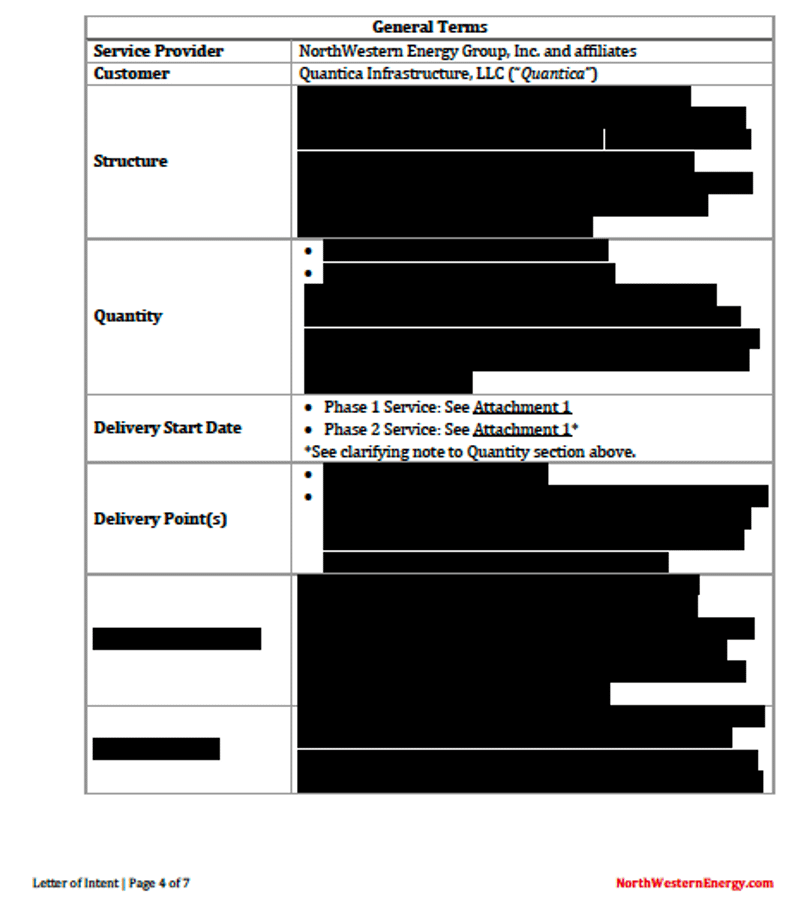
The grid is a public asset. The people of Montana built it and maintain it through our rates. We should control who benefits from it, and on what terms. That question must be answered before the next rate case, before one more data center agreement gets blacked out in a regulatory filing.
With your vote, House District 92 will have a representative who has already been in that room, asking the questions they tried to suppress.
Capital is not finite for Meta and BlackRock. Capital is not finite if you can make someone else pay. Montana ratepayers should not be that someone.
Your vote is how we make sure our voice isn’t finite either.
Call to Action:
- Watch my closing argument on the May 15 tape starting at 6:20.
- Contact the PSC: Email the Montana Public Service Commission at PSChelp@mt.gov and tell them to REJECT the NorthWestern-Black Hills merger. Tell them you do not consent to signing a blank check for Big Tech.
- Share this post: The utilities are counting on you not paying attention. Prove them wrong.
All together.