The phrase came from the witness stand at the hearing last week in Helena on Black Hills’ acquisition of NorthWestern. Since the hearing, people have been saying: we know we’re being taken. We just can’t see where it starts and ends.
That illegibility is the point. Blacked out documents. Secret contracts. Objections ruled irrelevant before they land. Things designed to be unknowable are designed that way on purpose.
Here is what I know, because I was in the room asking questions.
When Montana authorized NorthWestern Energy to operate as a monopoly without competition, with captive customers, and with guaranteed territory, it made a deal. The utility gets the franchise. In return: just and reasonable rates, an obligation to serve everyone, and a return that is reasonable. Enough to attract capital. Not enough to extract it.
That is the entire compact. And because there is no market to discipline NorthWestern’s behavior, the PSC must be the market. It is the only competitive check captive ratepayers have. That is not a metaphor. It is the legal architecture of utility regulation.
So when a Black Hills witness said under oath that capital is not finite, she was telling Vanguard and BlackRock something specific: the captive ratepayers will backstop your risk through the regulated rate base. You will not lose.
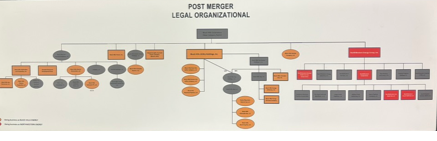
Black Hills and NorthWestern told shareholders why the deal mattered: capital investment opportunities, data centers, large-load growth, market capitalization, accretive growth, EPS growth, dividends, regulatory diversity, scale.
Those are shareholder words.
The utilities know this. Which is why they work so hard to keep what they tell investors out of the regulatory record, and to keep the PSC from doing its job.
When NorthWestern recently acquired a new 370-megawatt share of the Colstrip plant from Puget Sound Energy for exactly zero dollars, they didn’t use that free power to lower our bills. They parked it in an unregulated affiliate called Colstrip 370Pu LLC to contract out to corporate data centers and wholesale markets.
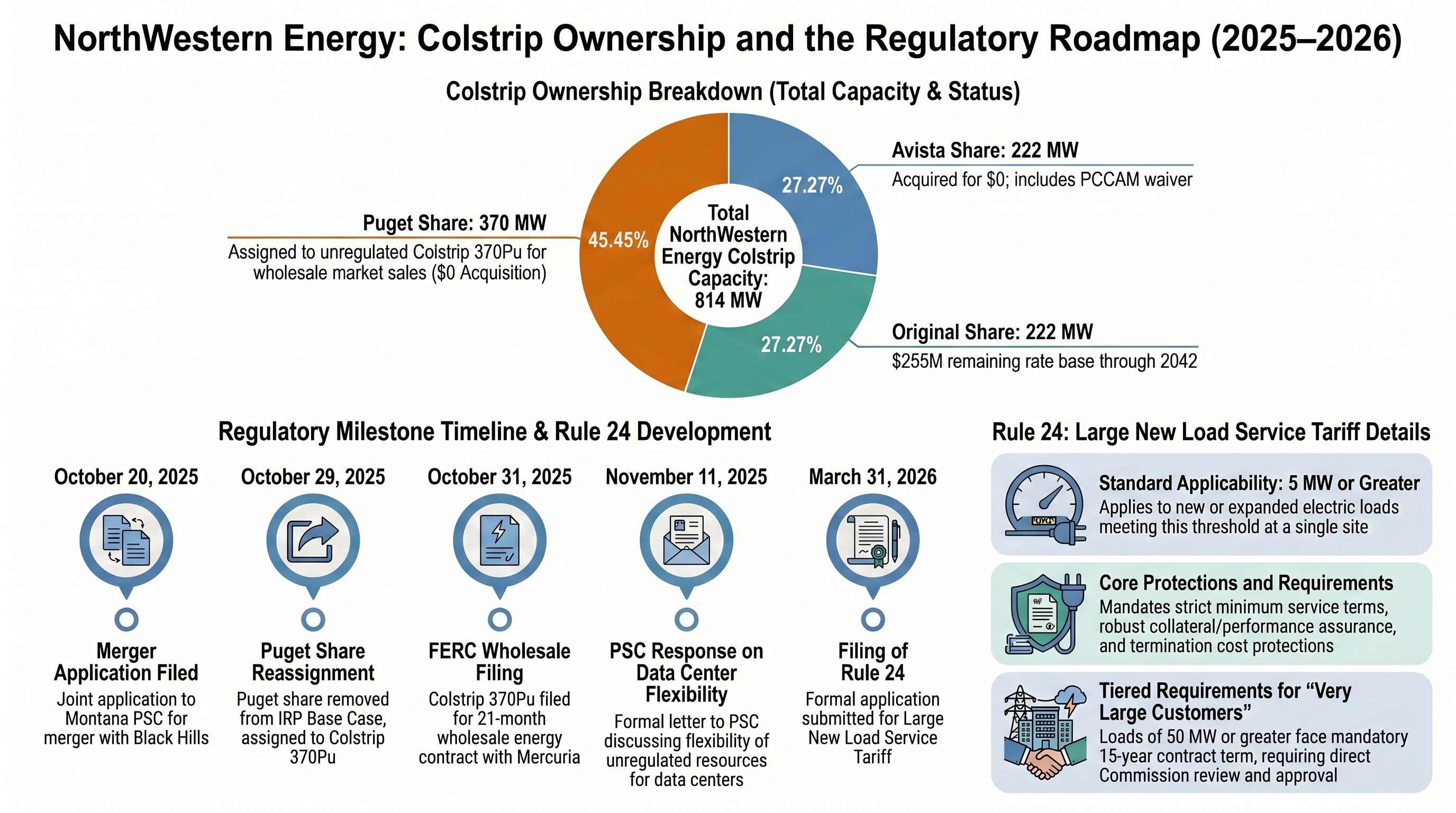
Under Montana’s 2007 re-regulation law, customers with loads over 5 megawatts have the legal right to shop for electricity from competitive suppliers instead of buying bundled supply from NorthWestern. Montana State University is one of those customers, often referred to as choice customers, because they can choose their supplier. Malmstrom Air Force Base, industrial facilities, and other large institutions that anchor Montana’s economy and employ Montana’s people are among those customers.
When I asked whether MSU would have access to the zero-dollar acquisition share of Colstrip power, NorthWestern’s lawyers shut the questioning down. Not relevant to this docket.
Who uses the grid, and who pays, is relevant. It is the entire case.
When a monopoly hides its cheapest newly acquired power in an unregulated affiliate to serve data centers, MSU finds itself competing directly against Meta and Microsoft for power generated in our own backyard. The Bobcats vs. a $1.5 trillion hyperscaler. For Colstrip power that Montana ratepayers have been funding for decades.
That is not a market. It is a mugging with paperwork.
There is a real question about what it means for a land-grant university’s power costs to be shaped by decisions made by an eight state corporation that answers to Meta’s server farms in Cheyenne.
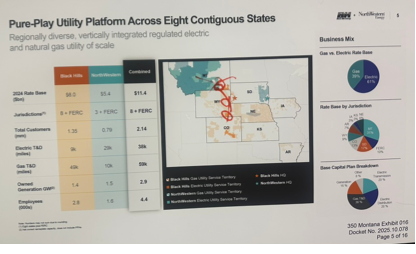
NorthWestern’s CEO told investors that after this acquisition, Montana drops from 85-90% of NorthWestern’s business to “just over 30%.” He called that regulatory diversity, a selling point, because a bad outcome in any one state hurts (the shareholders) less.
Good for people who can diversify across eight states. Not for people with one utility, one rate, one bill, and no exit.
The legal standard guiding the Commission is not whether this acquisition is good for BlackRock. It is whether it is in the public interest, causes no harm to customers, and provides a net benefit. Those tests are written into Montana law. They are not suggestions.
If the PSC cannot force these utilities to honor the compact, we must give communities the right to exit. Captive ratepayers must have a protected pathway to public power options that serve our public interest, not Wall Street. The CSKT proved it works when they reclaimed the Séliš Ksanka Ql’ispé Dam. Missoula proved it with Mountain Water. This is not a radical idea. It is a Montana tradition.

Your voice matters. Email the PSC at PSChelp@mt.gov. Demand the data center cost allocation question be answered on the record before any vote. Tell them to reject this merger.
The secrecy is not a side effect. It is the product.
Capital is not finite for Meta and BlackRock.
For captive Montana ratepayers, it is. It’s time for our regulators to act like it.
All together.